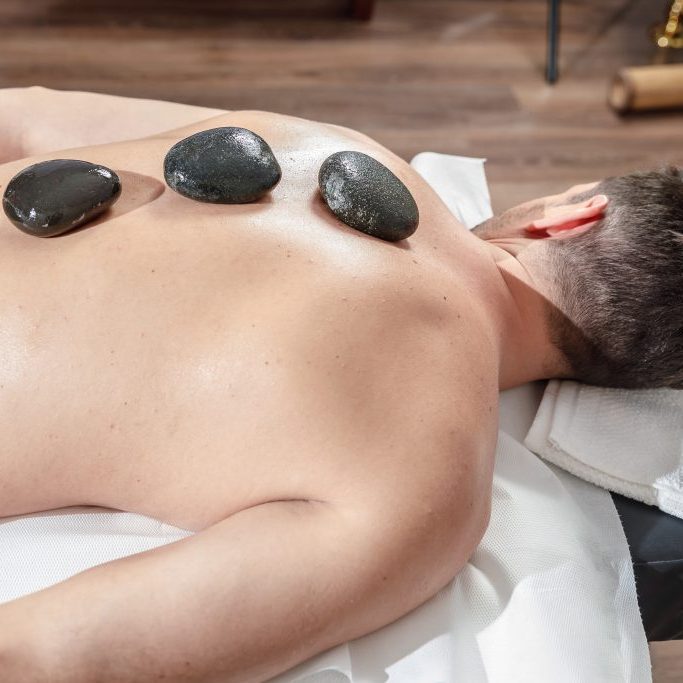
Massage for insomnia and better sleep
You toss and turn, glance at the clock, count the hours left before the alarm, and the harder you try to fall asleep, the further away sleep seems. If that scene feels familiar, you are not alone: restless nights, repeated wake-ups and the feeling that you never truly rested are among the most common complaints of modern life. Massage for insomnia is not a miracle cure and does not replace your doctor’s advice, but it is one of the most pleasant and natural ways to help your body step out of alert mode and settle back into its own rhythm of rest. At Bali Temple we offer it in the form of our relaxation massage, a gentle, slow and deeply soothing treatment designed for exactly those moments when the mind refuses to switch off.
What is massage for insomnia
Massage for insomnia is not a separate technique with an exotic name. It is a way of building the session so that every movement works in favour of sleep. The pressure is moderate to light, the rhythm is slow and steady, and the therapist avoids energising strokes that would have the opposite effect. The goal is not to “fix” one specific thing, but to give the nervous system a clear, repeated signal that it is safe and can let its guard down.
At Bali Temple, the closest treatment to this approach is the relaxation massage, in which the therapist blends long Swedish-style strokes with elements of the Balinese tradition: full-palm gliding, light pressure on tension points and special attention to the areas that hold the most stress, meaning the neck, shoulders, back and feet. The session takes place in a room with warm light, quiet music and scented oils, because when it comes to sleep, the atmosphere matters as much as the technique.
The techniques of massage for insomnia
The first and most important technique is effleurage: long, continuous strokes performed with the whole palm, from the nape of the neck to the lower back or from the ankle up to the thigh. The slow, predictable rhythm is the key. The brain quickly learns that no surprise is coming, and breathing deepens on its own. The therapist keeps returning to these strokes between the other movements, like a calming refrain.
On top of this foundation come gentle static pressure on the tension points at the base of the skull, on the trapezius and between the shoulder blades, slow kneading of the shoulders, a dedicated scalp and temple massage, and work on the soles of the feet, where reflexology and relaxation massage meet. Many people fall asleep exactly when the therapist reaches the feet or the head, and that is no coincidence: these are the areas with the highest density of nerve endings and the strongest calming effect.
How it works
In many cases, insomnia is a problem of a “switch” stuck in the on position. The sympathetic nervous system, the one responsible for the fight-or-flight response, stays active in the evening because of stress, screens, coffee or thoughts that keep spinning. Slow, rhythmic touch stimulates receptors in the skin that send the brain a message of safety, and the parasympathetic nervous system, the one in charge of rest and digestion, gradually takes over. The heartbeat slows down, the muscles soften, breathing becomes deeper.
At the same time, studies on massage show a drop in cortisol, the stress hormone, and a rise in serotonin, which is a precursor of melatonin, the hormone that regulates the sleep-wake cycle. We do not promise that one session rewrites your body’s chemistry, but the mechanism is real and easy to feel: after a massage, thoughts turn more slowly and the eyelids grow heavy. Many clients tell us that the night after their massage is the best one of the week.
The benefits of massage for insomnia
The most visible benefit is the one you came for: you fall asleep more easily. The body leaves the massage in a state of physical calm that is hard to reach any other way, and if the session is in the evening, the transition to sleep becomes almost natural. Just as important, sleep tends to be more continuous, with fewer wake-ups, because the muscle tensions that make you toss and turn (tight shoulders, a stiff back, restless legs) have been worked on directly.
There are also benefits that build up over time. Regular relaxation helps lower your overall stress level, reduce tension headaches and improve your mood during the day, and each of these in turn supports better sleep. It is a virtuous circle: you sleep better, you handle stress more easily, tension no longer builds up as fast, so you sleep even better. If you are drawn to an even slower and more enveloping treatment, the Lomi Lomi massage is the favourite of those looking for a complete switch-off.
What a session at Bali Temple looks like
Everything starts with a short conversation: how you sleep, where you feel tension, what keeps you awake, whether you have any pain or conditions we should know about, and whether you prefer a lighter or a slightly firmer pressure. Based on your answers, the therapist shapes the session. You are then left alone for a few minutes to get ready, you lie down on the table under a warm towel and the light dims.
The session usually begins on the back, with long strokes that warm up the muscles, continues with the neck and shoulders, then moves down to the legs and feet. It often ends with a head and face massage, the moment when most clients are already half asleep. The oils we use carry notes of lavender, ylang-ylang or sandalwood, chosen for their calming effect. You can choose 60 or 90 minutes; for insomnia we recommend the 90-minute option, because deep relaxation needs time to settle in.
Who it is recommended for
Massage for insomnia suits almost anyone whose sleep difficulties are linked to stress, pace of life or muscle tension. It is ideal for people who spend long hours at a desk and in front of a computer, for those with a packed schedule and a mind that never stops, for parents of small children who can barely find a quiet moment, or for anyone going through an emotionally difficult period.
It is also a good choice for people who do not want to, or cannot, rely on sleeping pills and are looking for a natural approach, as well as for those who have already tried sleep routines, meditation apps or herbal teas and feel that the physical piece is missing, the one that actually tells the body to stop. If you have never had a massage before, it is also a very gentle introduction to this world.
Precautions
Relaxation massage is one of the safest forms of massage, but there are situations in which you should talk to your doctor first: fever or an acute infection, thrombosis or clotting disorders, extensive skin conditions, recent fractures or surgery in the past few weeks, severe heart disease or uncontrolled blood pressure. During pregnancy, massage is possible and often welcome, but let us know in advance so we can adapt the position and the techniques.
It is also important to know that persistent insomnia can have medical causes (sleep apnoea, thyroid disorders, anxiety or depression, side effects of certain medications) that deserve to be investigated by a specialist. Massage is an excellent ally of good sleep hygiene, but it does not replace it and it does not replace a diagnosis. If your insomnia has lasted several weeks and affects your daily life, speak to your family doctor or a sleep specialist, then come for a massage as part of your recovery plan.
Massage for insomnia vs other massages
The difference from deep tissue or sports massage is one of intention and intensity. Those treatments work deeply, with strong pressure, to resolve knots and adhesions; they are useful, but they can leave the body in a slightly activated state, sometimes even with some muscle soreness, which does not help sleep that same evening. Massage for insomnia deliberately stays at a light to medium pressure and does not try to “unload” the muscles, but to persuade them to let go.
Compared with the classic Balinese massage, which alternates firm pressure with stretches and can be quite invigorating, the sleep-focused version keeps only the slow, enveloping elements. Its closest neighbour is the Lomi Lomi massage, with its broad forearm strokes that feel like waves. If you want a massage that pulls you out of alert mode and leaves you soft and drowsy, choose the relaxation massage or Lomi Lomi; if you have specific muscle pain, sort that out first with a firmer massage, on another day.
What you feel afterwards
Right after the session, most people describe a pleasant heaviness in the body, a quieter mind and a general slowing of pace, as if someone had turned the volume down. You may feel sleepy on the way home already, which is why we recommend not planning anything demanding afterwards and, if possible, not driving long distances.
On the night after the massage, most clients fall asleep faster and sleep more deeply. To extend the effect, avoid screens and coffee that evening, drink water, take a warm shower and go to bed early. Over the following days you may notice a better tolerance to stress and an easier time switching off in the evening, effects that grow stronger if massage becomes a routine, for example every two weeks.
The authentic spirit of the island of Bali
In Bali, sleep and rest are not treated as a luxury but as a natural part of the balance between body, mind and spirit, a principle known as Tri Hita Karana: harmony with people, with nature and with the divine. Traditional Balinese massage was born in this culture, in which touch is a gesture of care, and the evening ritual, with warm oils and frangipani flowers, was how a family prepared the body for rest after a day in the rice fields.
At Bali Temple we brought this spirit to Bucharest not only through techniques, but through the whole atmosphere: our therapists are trained in the Balinese tradition, the space is designed with wood, stone and warm light, and every session begins and ends with a moment of stillness. When you come for a massage for insomnia, you do not just get an hour of relaxation, but a small piece of the island’s slow, gentle rhythm, exactly the rhythm a tired body needs to remember how to sleep.
Frequently asked questions
What time of day is best for a massage for insomnia? Ideally in the evening, two to three hours before the time you want to go to bed, so you get home relaxed and slip straight under the covers. If evenings do not work for you, an afternoon session still has an effect on that night’s sleep, because your stress level drops and stays low for a good few hours.
How often should I get a massage to sleep better? One session has a noticeable effect for one or two nights. For a result that lasts, most clients choose a session every two weeks during stressful periods and once a month for maintenance. A massage subscription can make the routine easier to keep.
Can I fall asleep during the massage? Is that okay? Yes, and it happens very often. It is actually the sign that the session has done its job. The therapist continues at the same pace and wakes you gently at the end, giving you a few minutes before you get up. There is no need to feel embarrassed and no need to force yourself to stay awake.
Price and booking
At Bali Temple, massage for insomnia is available as our relaxation massage, in 60- and 90-minute sessions. See the latest details and prices and book directly on the Relaxation Massage page, or explore all our treatments in the classic massage section.